We review your comfort concerns and assess accessible ductwork for damage, leakage, deterioration, and design issues.

Old, damaged, or poorly designed ductwork can make it difficult to keep every room comfortable. Peniel HVAC helps homeowners explore ductwork replacement solutions designed around their home’s layout and heating and cooling requirements. Upgrade your air distribution system with ductwork planned for reliable airflow and everyday comfort.

Your HVAC system depends on properly designed ductwork to deliver heated and cooled air throughout your home. Over time, ducts can deteriorate, insulation can become damaged, and connections can develop leaks. In some homes, the original duct layout may also be unsuitable for updated equipment or renovated living spaces.
Although sealing or repairing individual sections can solve some problems, extensively damaged, deteriorated, or poorly designed ductwork may benefit from replacement. A properly planned duct system considers the home’s layout, equipment capacity, airflow requirements, and the placement of supply and return vents.
Peniel HVAC helps homeowners assess their existing ductwork and explore suitable replacement options. Whether you’re dealing with aging ducts, recurring airflow issues, or a major home renovation, the right approach starts with understanding the condition of the current system and what your home needs.
Your ducts repeatedly develop leaks, loose connections, or damaged sections. When problems affect multiple areas, replacing the ductwork may be more practical than ongoing repairs.
Some rooms remain too hot or too cold despite thermostat adjustments. Aging, incorrectly sized, or poorly designed ductwork may be affecting air distribution.
You notice crushed flexible ducts, corrosion, damaged insulation, or deteriorating duct sections. Extensive damage can make replacement a more suitable option than patching individual areas.
Several rooms receive noticeably less conditioned air than expected. Restricted or poorly designed ductwork may be contributing to the problem.
You're renovating your home or replacing your heating and cooling equipment. The existing ductwork may need to be redesigned or replaced to suit the updated layout or new system.


Replace an extensively damaged or unsuitable duct network with a new system planned for your home’s layout and HVAC requirements. The project can include removing old ductwork and installing new supply and return ducts where required.

When damage is limited to particular sections, replacing those portions may be more practical than removing the entire system. The remaining ductwork should be assessed to ensure it is suitable for continued use.
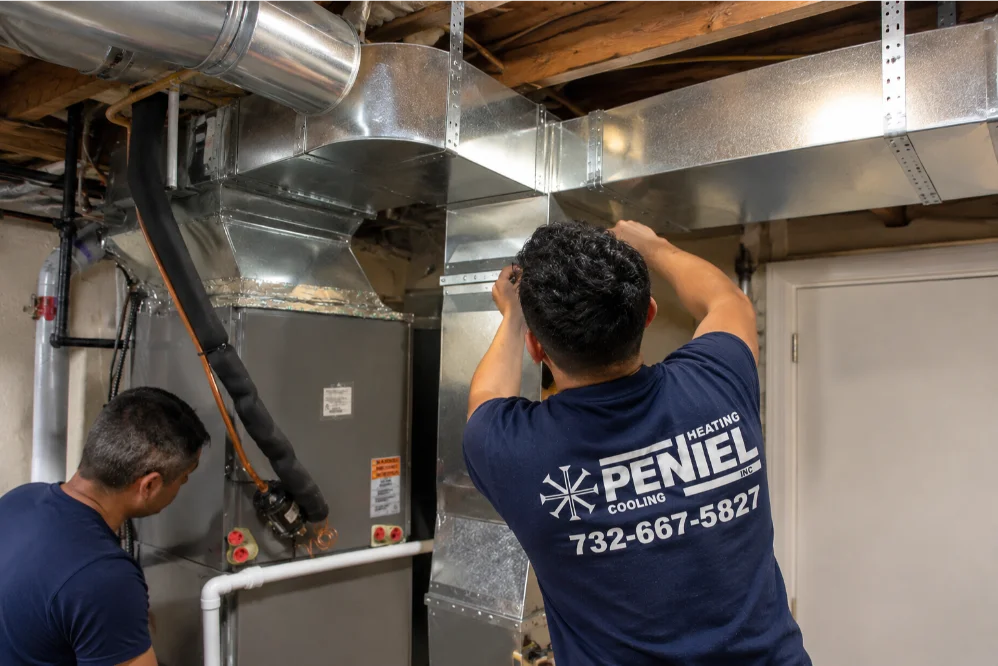
Supply ducts deliver conditioned air to your rooms, while return ducts carry air back to the HVAC equipment. Replacing unsuitable sections on either side can help address air distribution problems when the underlying design is also appropriate.

Different duct materials suit different applications and installation conditions. We can assess suitable replacement options based on the home’s layout, available access, airflow requirements, and compatibility with the HVAC system.
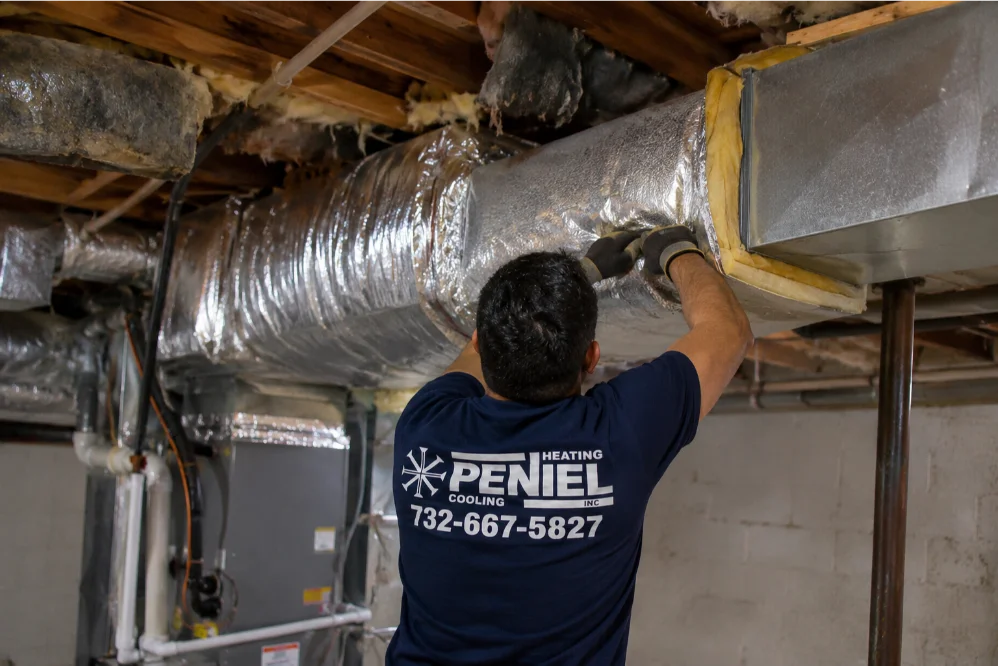
Damaged or deteriorated insulation can contribute to unwanted heat transfer and condensation under certain conditions. Replacing affected insulation or insulated duct sections can help protect the system and maintain more consistent air temperatures.

Older duct systems may not suit renovated rooms, updated HVAC equipment, or changes to the home’s layout. Replacement provides an opportunity to review duct sizing, routing, and supply and return placement as part of the overall design.

We review your comfort concerns and assess accessible ductwork for damage, leakage, deterioration, and design issues.

We consider your home’s layout, HVAC equipment, duct routing, airflow requirements, and insulation needs when developing the replacement approach.

Once you approve the proposed work, the agreed duct sections are removed and replaced according to the project requirements.

We review the completed installation and check system operation and airflow as appropriate for the project.
If your ducts are deteriorating, repairs keep recurring, or your home has persistent airflow problems, it may be time to consider replacement. Contact Peniel HVAC to discuss your existing system and explore a solution suited to your home’s heating and cooling needs.

Peniel HVAC serves homeowners in Bound Brook, Bridgewater, Somerset, and Piscataway with heating, cooling, and related HVAC services.
Our service area also includes Warren, Martinsville, Hillsborough, Basking Ridge, Middlesex, Green Brook, North Plainfield, Plainfield, Somerville, Manville, and Watchung.
We also serve Westfield, Scotch Plains, Berkeley Heights, Millburn, Short Hills, Princeton, Metuchen, and Flemington. Contact us to discuss your ductwork replacement project and confirm service availability.
Our old ductwork was in poor condition, and we wanted to address it properly. Peniel HVAC explained the replacement process and answered all my questions. The team handled the work professionally and kept me informed. I'm very pleased with the result. Highly recommended!
I wanted to replace our existing ductwork because of ongoing airflow issues. Peniel HVAC discussed the options and helped me understand the work involved. The team was professional and easy to communicate with. I'm glad we moved forward. Very happy with their service!
Replacing ductwork sounded like a complicated project, but Peniel HVAC made it straightforward. They explained the process and kept me updated throughout the work. I appreciated how respectful the team was of our home. The experience was excellent, and I'm happy with the outcome!
Our ductwork needed attention, and I wanted to avoid repeated problems. Peniel HVAC helped us understand why replacement was worth considering. The work was handled professionally, and communication was excellent. I'm relieved to have this project completed. Great experience!
We needed our old ductwork replaced during a larger home improvement project. Peniel HVAC explained the work clearly and made the process easier. The technician was friendly and answered all my questions. I'm very happy with the service. Would definitely recommend them!
When ductwork has extensive damage, persistent leakage, or deterioration that cannot be adequately addressed through repairs, replacement may be worth considering. A properly planned project takes the condition of your existing ducts and the needs of your HVAC system into account.
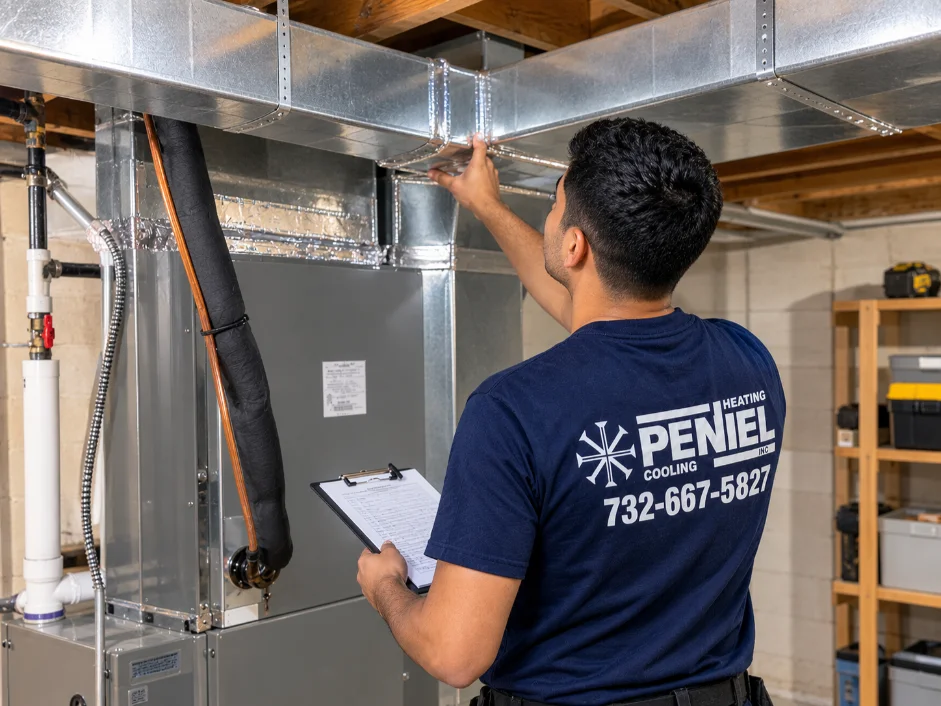
Ductwork replacement may be appropriate when ducts have extensive damage, widespread deterioration, persistent leakage, or a layout that no longer suits the HVAC system. Isolated problems may be resolved through repairs instead. An assessment helps determine which option makes the most sense.
Not always. Repair is often suitable for isolated leaks, loose connections, or limited damage, while replacement may be more practical when many sections are deteriorated or poorly designed. The decision depends on the extent of the problems and the condition of the remaining system.
Properly designed and installed ductwork can help distribute conditioned air more effectively throughout a home. Results depend on duct sizing, routing, supply and return placement, and HVAC equipment capacity. Other system issues may also need attention.
A straightforward residential project may take one to three days of on-site work, while larger homes or complex installations can take longer. Access to attics, crawl spaces, and enclosed areas can affect the timeline. Your contractor can provide a more accurate schedule after assessing the scope.
Not necessarily. Existing ducts may remain suitable if they are in good condition and compatible with the new equipment's airflow requirements. However, damaged, leaking, or incorrectly sized ductwork may need repairs, modifications, or replacement.
Residential ductwork replacement typically costs around $3,000 - $12,000, depending on home size, duct materials, the number of supply and return runs, accessibility, and installation complexity. Partial replacement may cost less than replacing the entire duct network.
Replacing damaged or poorly connected ducts and properly sealing the new system can reduce conditioned-air leakage. Insulation can also help limit unwanted heat transfer where needed. Actual energy savings depend on the condition of the old system, the new design, and how the HVAC equipment operates.
Residential duct systems commonly use sheet metal, flexible duct, or other approved duct materials, depending on the application. Each has different installation requirements and suitable uses. The right choice depends on the home's layout, airflow needs, accessibility, and applicable building requirements.
Ducts routed through unconditioned spaces often need appropriate insulation to reduce heat gain or loss and help manage condensation risks. The required insulation depends on the duct location and applicable requirements. Properly sealed connections are also important.
Permit requirements depend on the project scope and the municipality's applicable construction requirements. Before work begins, the contractor should determine which permits and inspections apply to the specific replacement. Ask for confirmation as part of the project planning process.
Worn or unsuitable ductwork can make it harder to maintain comfortable temperatures throughout your home. Contact Peniel HVAC to discuss ductwork replacement and find an approach suited to your property’s layout and heating and cooling requirements.

Serving comfort. Powered by Faith
© 2026 | Peniel HVAC. All Rights Reserved.
Made with 🤍 by Priyash Kadu
WhatsApp us